

(Family Features) The holiday season brings sparkling lights, cherished traditions and joyful gatherings with the people and pets you love most. As you deck the halls and prepare for cozy celebrations, it’s important to remember some of the magic of the season can also pose risks for curious cats and dogs.
To provide pet owners added peace of mind, consider these tips from the experts at VCA Animal Hospitals, a leader in veterinary care with more than 1,000 locations dedicated to positively impacting pets, people and the communities they serve, to keep the holidays merry – and safe – for everyone.
Decorations and Festive Outfits
From family photos to holiday cards, many pet owners love including their companions in the festivities. If you dress your pet for pictures, choose outfits that are comfortable, allow easy movement and don’t interfere with breathing or vision. Pets are naturally drawn to shiny and dangling decor, so opt for shatterproof ornaments and avoid using tinsel, which can cause serious internal issues if swallowed.
Hang small or salt-dough ornaments high on the tree, out of paws’ reach, to help prevent choking. After opening gifts, promptly discard wrapping paper, string and ribbon; items that may seem fun to play with but can be dangerous if ingested.
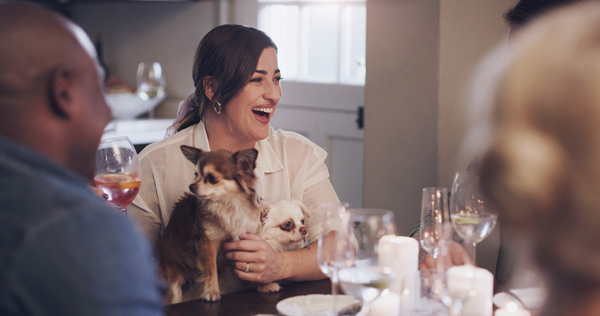 Food and Drinks
Holiday tables overflow with delicious treats, but many seasonal foods can be harmful to pets. Chocolate, grapes, raisins, xylitol-sweetened candies and leftover meat scraps may lead to serious illness. Politely remind guests not to slip your pet any treats, no matter how festive the occasion feels.
Quickly pack away food when meals end to help reduce temptation. Alcoholic beverages should also be kept well out of reach. Pets absorb alcohol much faster than humans, and even small amounts can cause alcohol poisoning.
Candles and Burns
The glow of candles and warm fireplaces add comfort and charm this time of year, but open flames pose fire risks and burn hazards for pets. Keep pets at a safe distance from fireplaces, wood stoves and space heaters, as curiosity can bring them too close.
Consider using battery-operated candles in place of traditional ones. If you use real candles, ensure they’re placed out of reach and never left unattended; even stepping away for a moment can increase the risk of accidents.
Plants and Trees
Holiday greenery brings beauty to your home, but some plants require extra caution around pets. While Christmas trees themselves are generally non-toxic, the water in the tree stand may contain mold, bacteria or fertilizers. Use a tree skirt or cover to prevent pets from drinking from it.
Decorative plants like poinsettias, mistletoe, lilies, holly and amaryllis can cause gastrointestinal upset if nibbled on. Keep these seasonal favorites well out of reach, especially if you live with adventurous or plant-curious pets.
Cold Weather Walking
Winter walks can be refreshing for you and your dog, but shorter days and colder weather mean extra care is needed. Use a non-retractable leash during early morning or evening walks, and ensure both you and your pet wear high-visibility gear so drivers and others can easily spot you.
If you live in an area with snow or ice, monitor conditions closely and watch the wind chill. Dressing your dog in a warm sweater or jacket and offering booties for paw protection can help them stay comfortable and safe on frosty outings.
By taking a few thoughtful precautions, you can help ensure your pets enjoy a safe, joyful holiday season right alongside the rest of the family. If you have questions about winter safety or your pet’s health, consult your veterinarian. For more tips to keep your pet safe this holiday season, and to find a location near you, visit vcaholiday.com.
Photos courtesy of Shutterstock
Source: VCA Animal Hospitals


