

(Sheeka Sanahon) A child who’s been treated for cancer walks down the hall of a medical facility, nurses and doctors smiling at them from all corners of the room. The child rings a bell, and everyone cheers as the kid hugs their loved ones. These heartfelt videos appear regularly across social media. What helps make each of those moments possible is decades of research and innovation. In the last 10 years, the Food and Drug Administration (FDA) approved 10 new immunotherapies and 20 molecularly targeted therapies to treat pediatric cancers, according to the American Association for Cancer Research.
For every bell-ringing child whose video goes viral online, a longer health journey awaits. Hyundai Hope on Wheels, which has funded pediatric cancer research for nearly three decades, commissioned a survey to understand how much Americans know about that journey.
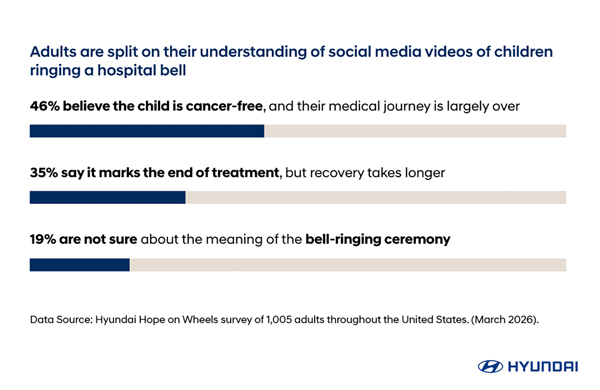
As September marks Childhood Cancer Awareness Month, what that journey actually looks like is worth understanding. According to the survey, 46% of U.S. adults believe that a child ringing a hospital bell after cancer treatment signifies the child is cancer-free and their medical journey is largely over. The reality is more nuanced than that.
When cancer survivorship begins
Many health care organizations define survivorship as beginning at the time of diagnosis and continuing through treatment and beyond. Understanding survivorship this way helps recognize that a child’s cancer journey is about more than reaching the end of treatment. It also includes managing long-term physical, emotional and medical needs that may continue for years to come.
More than a third of U.S. adults say they’re not familiar with the term cancer survivorship or they have heard theterm but don’t fully understand what it means.
According to the American Association for Cancer Research, children who survive cancer face several long-term physical and psycho-social challenges due to their cancer and treatment. Children could face planned surgeries, additional rounds of radiation, or other forms of medical treatment to address common physical challenges stemming from chemotherapy. Every child’s medical treatment plan is different based on their specific needs, but one thing is clear: Pediatric cancer survivors need ongoing support as they navigate long-term health challenges.
Supporting children to live long, full lives
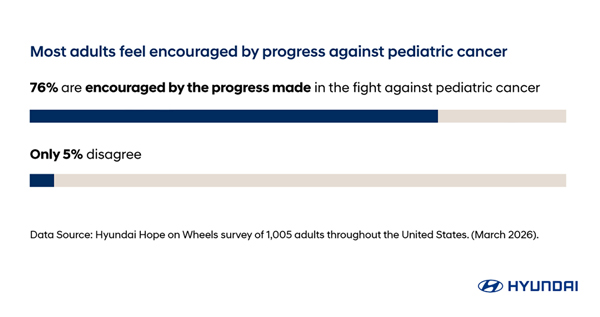
More than 3 in 4 U.S. adults are encouraged by the progress in pediatric cancer, up 5 points from last year. There’s good reason to be hopeful, too. According to the American Cancer Society, the survival rate among pediatric cancer patients has increased from 75% to 85% in nearly three decades, representing 40,000 more children surviving their cancer diagnosis.
Survival rates continue to increase thanks to breakthrough science and technology, and higher standards of care. Pediatric cancer research has led to new insights into cancer biology, clinical trials, and new drug development.
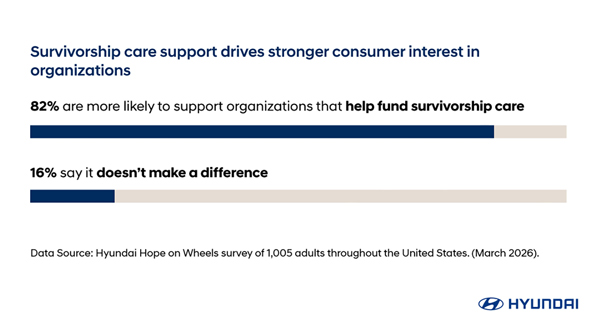
More than 8 in 10 adults say they’re more likely to support organizations that fund survivorship services, which creates more opportunities to fund crucial research and support for children facing pediatric cancer.
Methodology
Hyundai Hope on Wheels commissioned Atomik Research to conduct an online survey of 1,005 adults throughout the United States. The margin of error is +/- 3 percentage points with a confidence level of 95%. Fieldwork took place March 19-26, 2026. Atomik Research, part of 4media group, is a creative market research agency.
Photo courtesy of Shutterstock
Source: Hyundai Hope on Wheels


