

(Feature Impact) The busy summer season can take you almost anywhere – baseball fields, backyard cookouts, long workdays or road trips across the country. Regardless of where you are, summer is a reminder that emergencies like cardiac arrest can happen anywhere.
More than 350,000 out-of-hospital cardiac arrests occur in the United States each year, and 90% of people will not survive, according to the American Heart Association, a nonprofit organization devoted to changing the future for a world of healthier lives for all. Sudden cardiac arrest can happen anytime, anywhere. People often hesitate to step in. In fact, nearly 2 out of 3 adults believe CPR can only be performed by medical professionals. This mistaken belief can cost lives and contributes to the low survival rate.
Ordinary people have extraordinary power. You don’t need to wear scrubs or have a medical background to save a life – you just need the courage to act.
Take the safety of those around you into your own hands this summer with this checklist.
Plan Ahead
Summer is often a time for welcome disruptions, including vacations, camps, sports and parties. Before traveling or attending events, check if your destination has a cardiac emergency response plan, which establishes specific steps to reduce death from cardiac arrest in any setting, from schools and community organizations to workplaces and sports facilities.
 Learn CPR
Cardiac arrest can happen anywhere: at home, at work, in schools, at a soccer game or on vacation. When it happens, the first chance for survival often rests with the people nearby.
Anyone can be the difference before professional help arrives. The power to save a life is in your hands. CPR is a human responsibility, not just a medical skill. When friends, family or even strangers step in during cardiac emergencies, survival rates can double or even triple.
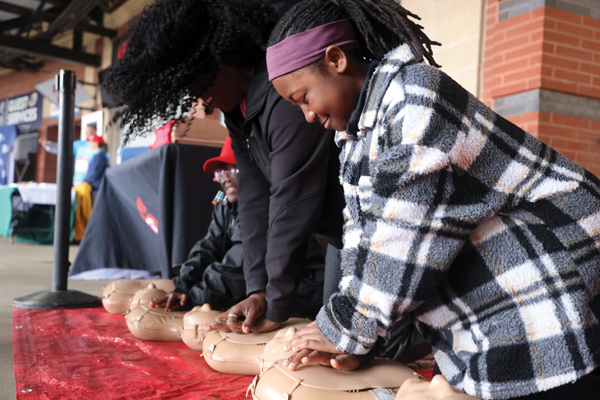
Hands-Only CPR for adults consists of two easy steps:
- Call 9-1-1 or shout for someone else to call.
- Push hard and fast in the center of the chest to the beat of a familiar song that’s 100-120 beats per minute, such as “Stayin’ Alive” by the Bee Gees.
Share Resources with Your Family and Community
Once you’ve learned simple, two-step Hands-Only CPR, share resources with your community to help expand the American Heart Association’s Nation of Lifesavers. Raising awareness with family, neighbors and colleagues can help people feel confident in the face of an emergency.
Families can watch short instructional videos that demonstrate the life-saving steps for adults as well as techniques for infants and children.
Travelers can also get trained in about 5 minutes with a Hands-Only CPR Kiosk, located in many airports and public spaces across the country.
To find more information about learning CPR, visit Heart.org/Nation.
Summer Safety Tips
In addition to learning CPR and sharing valuable resources with your family and community, consider these ways to keep yourself and loved ones safe throughout the summer months.
- Stay Hydrated: High temperatures can quickly lead to dehydration and heat-related illness. Drink water regularly throughout the day, especially during outdoor activities, and pack extra water when away from home.
- Protect Your Skin: Hats, sunglasses and lightweight clothing can protect skin from sun exposure, but it’s important to use broad-spectrum sunscreen and reapply every 2 hours.
- Swim with a Buddy: Hopping in a pool, lake or ocean is a hallmark of summer but can be dangerous without precautions. Never swim alone and ensure children are always supervised by an adult near water.
- Identify the Locations of Safety Equipment: When attending camps, heading to a sporting event or enjoying the pool or beach, identify where lifeguards, AEDs and emergency exits are located. Knowing where to find help can save valuable time when every second counts.
- Practice Grill Safety: Some of your most memorable summer moments may happen during a backyard barbecue or cookout, and it’s important to keep those gatherings safe. Use grills away from homes, decks and dry grass. Never leave them unattended while cooking, and be sure kids and pets stay at a safe distance from hot surfaces.
Saving a Life Within 1 Year of Learning CPR

On a chilly Tuesday, dawn was breaking as Matthew Lynch reached his highway exit, but traffic was backed up at a particular intersection. He waited through three cycles before finally getting close enough to see the holdup: a stalled SUV.
While most cars buzzed by, Lynch moved slowly and peered into the vehicle. He saw people inside and parked his sedan, flipped on the hazard lights and ran to the stalled SUV. As he knocked on the driver’s window, there was no response. The doors were locked. Two people – a male driver and female passenger – were unresponsive.
Lynch ran back to his own car and called 9-1-1 before managing to open the driver’s side door. He discovered the driver was not breathing normally, signaling to Lynch he’d need to start CPR – which he’d learned 10 months earlier during a training session he’d helped organize for a work-sponsored men’s group.
Knowing he had to do something, Lynch started pushing hard and fast in the center of the man’s chest. Within a minute, the man gasped for breath.
Just as Lynch leaned over to see if he could help the female passenger, first responders arrived and Lynch backed away, knowing there was nothing more he could do.
“It was just a lot to take in,” said Lynch, a member of the American Heart Association’s 2026 Nation of Lifesavers Class, a small group of volunteers, dedicated to raising awareness of CPR by sharing their own personal stories of survival or rescue. “Mostly I felt an incredible sense of gratitude that I could help someone.”
A strong admirer of the Good Samaritan parable, Lynch is always on the lookout for the opportunity to help others. He learned a lot about himself in that moment and about the importance of learning CPR, along with the confidence that comes from knowing you could be a lifesaver.
“I quickly realized the certification was way less important than the actual CPR training,” he said. “Your ability to help in any capacity is better than doing nothing. If I hadn’t done that training, I probably would not have helped.”
Source: American Heart Association


